Protecting Your Brain as an Athlete
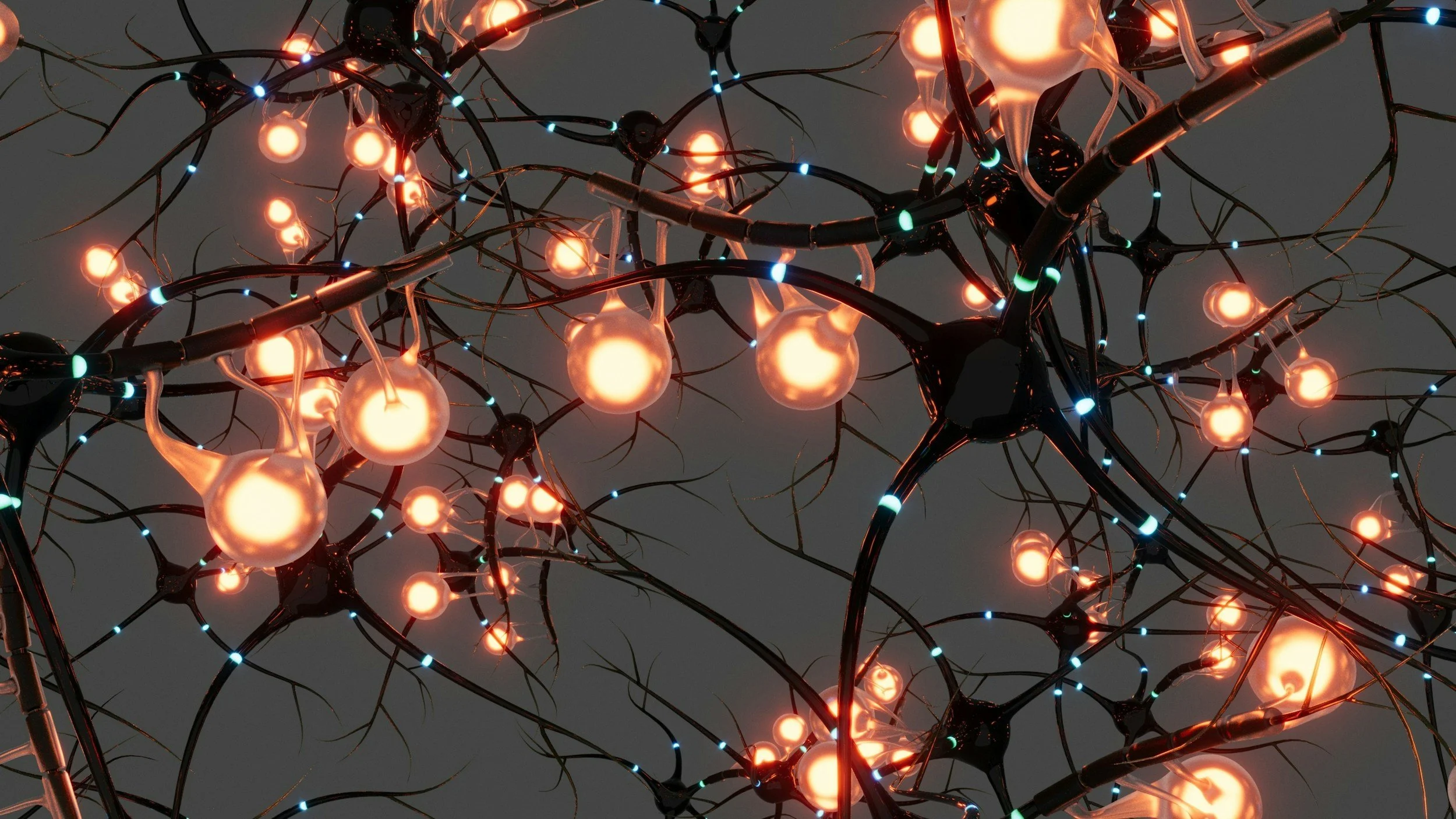
Neurons that are black with different parnts light up like lightbulbs.
Our brains are essential to our daily lives! That might be one of the most obvious statements. Still, it’s worth saying because we can occasionally take our brains for granted. We can see this in athletics sometimes, so it is essential that we make the brain the center of our conversation at times. So it is with that in mind that we take a look at what protecting our brain in the context of athletics means. Protecting the brain in athletics is a multi-layered approach that requires thinking about physical safety, neurobiology, and sports psychology. The brain serves as the “hardware” for our athletic performance and injuries or chronic stress, for example, can impact reaction time, emotional regulation, and physical coordination, to name a few. So let’s dive into our conversation about protecting the brain in the context of athletics!
Concussion Protocols and “Sub-Concussive” Hits
Chances are that many of you have heard about concussions in sports. As a quick reminder, concussions are a type of mild traumatic brain injury that occurs when an intense external force cause the brain to rapidly accelerate and decelerate in the skull, and result in rapid onset of short-term impairment of neurological functions that gets better within weeks (Khurana & Kaye, 2011; Musumeci et al., 2019). We often see concussions in both contact and noncontact sports, like boxing, martial arts, American football, rugby, soccer, ice hockey, horse riding, and alpine skiing. Multiple concussions do appear to be a risk factor for cognitive impairment and mental health concerns for some people (Manley et al., 2017). There is a lot of press about concussions, for good reason, but what about repetitive sub-concussive hits? Sub-concussive head impact happens when there is an impact to the head that does not result in obvious symptoms like dizziness, headaches, or short-term memory loss, which are often diagnosed concussions, but there are still structural brain alterations (Hack et al., 2024). And, just like concussions, there are adverse effects. Repetitive sub-concussive hits can lead to long-term cognitive issues and Chronic Traumatic Encephalopathy (CTE) due to micro-traumas (Ntikas et al., 2022).
Whether we are talking about concussions or repetitive sub-concussive hits, it is important to protect our heads in sports. With that in mind, ensure proper protective gear, especially helmets, is up to date and fits perfectly. Additionally, it is important to be honest when assessing readiness to play after being sidelined. Being proactive about protecting one’s brain means being honest about symptoms such as dizziness, light sensitivity, or subtle "brain fog" immediately after an impact. There is also some research suggesting that a stronger, more stable neck can reduce the "whiplash" effect on the brain during an impact, effectively lowering the risk of concussion (Waring et al., 2022).
Neuroplasticity and Skill Acquisition
Neuroplasticity is such a fun concept! Also known as neural plasticity or brain plasticity, neuroplasticity is a process that entails adaptive structural and functional changes to the brain caused by intrinsic and extrinsic stimuli or information (Puderbaugh & Emmady, 2023). Think about the implications of neuroplasticity. This is what allows us to learn, grow, and develop as we learn more! Now let’s turn our attention to sports. When we look at neuroplasticity in sports our brain changes in response to our training which allows us to enhance motor skills, improve coordination, and enhance performance via repeated, intense, and specific practice (Seidel-Marzi & Ragert, 2020; Zhang et al., 2024). When we vary our training, we are keeping our brain sharp. We can also consider cross-training, which forces the brain to create new neural pathways, helping to protect against cognitive decline (Dhahbi et al., 2025). Also, remember to sleep to help with memory consolidation and to help keep your brain ready to learn new plays or techniques.
Address the Stress
We all experience stress of some kind in our lives. It seems like in this day and age there is no escaping it. We can either experience good stress, eustress, or bad stress, distress. Eustress is short-term, motivating, and challenging and can help enhance our performance or resilience. Distress is the stress that can be chronic and overwhelming that leads to anxiety, burnout, and even poor health. And here is the interesting piece. Our brains cannot tell the difference between the different kinds of stress. The brain just experiences stress. And when the brain experiences stress, different structures can be impacted like the hippocampus shrinking or the amygdala becoming over-sensitive (McEwen, 2017).
So, what does this all mean for the athlete’s brain? It means that athletes take their recovery days and breaks! While we need these breaks for our body to repair, we also need them for our brains to repair and for our nervous system to down-regulate. Athletes may also consider using mindfulness to help build grey matter in the brain to help with emotional regulation and focus (Hölzel et al., 2011).
The Gut-Brain Axis
Yep! Our gut is connected to our brain. Believe it or not. The but-brain axis (GBA) is a bidirectional line of communication between the central and the enteric nervous system that links the emotional and cognitive centers of our brain with peripheral intestinal function (Carabotti et al., 2015). Think about competition or race days. Do you have GI trouble when you are nervous before racing or competing? This is just one example of the connection that lives in your body. Now we turn our attention to how the GBA plays a role in neurological protection. When we experience neuro-inflammation, we often experience systematic inflammation in our bodies (Carloni & Rescigno, 2023). And we know that inflammation in the body is not good for our bodies. So this is why athletes must think about their nutrition and hydration. For example, omega-3 fatty acids help with lowering inflammation (Simopoulos, 2002), and water helps with preventing brain shrinking and building up cerebrospinal fluid to help protect the brain. Work with a nutritionist or dietitian to help dial in your nutrition.
Mental Health and Connection
Protecting your brain means also protecting your mental health. High-pressure sports environments can lead to anxiety and depression, which have the potential to change brain chemistry (Eather et al., 2023). Taking care of one’s mental health pays dividends. Switching briefly to sport psychology, remember the power of positive self-talk. Our minds believe what we tell them. If we keep feeding our brains negative, hyper-critical self-talk our brains will stay in a defensive state. So speak positively to yourself and remember to build yourself up rather than tear yourself down. Finally, humans are social creatures. We were meant to in community and connection. Connect with your community, teams, etc. to help buffer stress responses. When we connect with people we are taking advantage of our ability to co-regulate with others.
Consider a morning routine that involves taking 30 seconds to check-in: How is my focus? How is my balance? Is my mood unusually low? By knowing your brain’s healthy baseline, you’ll be able to spot the subtle signs of injury or burnout before they become "loud" problems.
Remember we only ever get one brain. Take care of it!
take action today moment:
Make brain health a priority! Decide on one or two actions you would like to take to protect your brain health in daily life and on the field, track, or court.
Learn More About the Brain in Sports:
Beyond the Body: How the Brain Gets Involved in Sport
References
Carabotti, M., Scirocco, A., Maselli, M. A., & Severi, C. (2015). The gut-brain axis: interactions between enteric microbiota, central and enteric nervous systems. Annals of Gastroenterology, 28(2), 203–209.
Carloni, S., & Rescigno, M. (2023). The gut-brain vascular axis in neuroinflammation. Seminars in Immunology, 69, 101802. https://doi.org/10.1016/j.smim.2023.101802
Dhahbi, W., Briki, W., Heissel, A., Schega, L., Dergaa, I., Guelmami, N., Omri, A. E., & Chaabene, H. (2025). Physical activity to counter age-related cognitive decline: Benefits of aerobic, resistance, and combined training-A narrative review. Sports Medicine - Open, 11(1), 56. https://doi.org/10.1186/s40798-025-00857-2
Eather, N., Wade, L., Pankowiak, A., & Eime, R. (2023). The impact of sports participation on mental health and social outcomes in adults: a systematic review and the 'Mental Health through Sport' conceptual model. Systematic Reviews, 12(1), 102. https://doi.org/10.1186/s13643-023-02264-8
Hack, L., Singh, B., Binkofski, F., & Helmich, I. (2024). Repetitive subconcussive head impacts in sports and their impact on brain anatomy and function: A systematic review. International Journal of Sports Medicine, 45(12), 871-883. doi: 10.1055/a-2342-3604
Hölzel, B. K., Carmody, J., Vangel, M., Congleton, C., Yerramsetti, S. M., Gard, T., & Lazar, S. W. (2011). Mindfulness practice leads to increases in regional brain gray matter density. Psychiatry Research, 191(1), 36–43. https://doi.org/10.1016/j.pscychresns.2010.08.006
Khurana, V. G., & Kaye, A. H. (2011). An overview of concussion in sports. Journal of Clinical Neuroscience, 19, 1-11. :10.1016/j.jocn.2011.08.002
Manley, G., Gardner, A. J., Schneider, K. J., Guskiewicz, K. M., Bailes, J., Cantu, R. C., ... & Iverson, G. L. (2017). A systematic review of potential long-term effects of sport-related concussion. British Journal of Sports Medicine, 51(12), 969-977. doi:10.1136/bjsports-2017-097791
McEwen, B. S. (2017). Neurobiological and systemic effects of chronic stress. Chronic Stress, 1, 2470547017692328. https://doi.org/10.1177/2470547017692328
Musumeci, G., Ravalli, S., Amorini, A. M., & Lazzarino, G. (2019). Concussion in sports. Journal of functional Morphology and Kinesiology, 4(2), 37. https://doi.org/10.3390/jfmk4020037
Ntikas, M., Binkofski, F., Shah, N. J., & Ietswaart, M. (2022). Repeated sub-concussive impacts and the negative effects of contact sports on cognition and brain integrity. International Journal of Environmental Research and Public Health, 19(12), 7098. https://doi.org/10.3390/ijerph19127098
Puderbaugh M, Emmady PD. Neuroplasticity. [Updated 2023 May 1]. In: StatPearls [Internet]. Treasure Island (FL): StatPearls Publishing; 2026 Jan-. Available from: https://www.ncbi.nlm.nih.gov/sites/books/NBK557811/
Seidel-Marzi, O., & Ragert, P. (2020). Neurodiagnostics in sports: Investigating the athlete's brain to augment performance and sport-specific skills. Frontiers in Human Neuroscience, 14, 133. https://doi.org/10.3389/fnhum.2020.00133
Simopoulos A. P. (2002). Omega-3 fatty acids in inflammation and autoimmune diseases. Journal of the American College of Nutrition, 21(6), 495–505. https://doi.org/10.1080/07315724.2002.10719248
Waring, K. M., Smith, E. R., Austin, G. P., & Bowman, T. G. (2022). Exploring the effects of a neck strengthening program on purposeful soccer heading biomechanics and neurocognition. International Journal of Sports Physical Therapy, 17(6), 1043–1052. https://doi.org/10.26603/001c.38327
Zhang, J. P., Zhu, P., Cai, Z. L., Xing, X. X., Wu, J. J., Zheng, M. X., ... & Xu, J. G. (2024). Sports promote brain evolution: A resting-state fMRI study of volleyball athlete. Frontiers in Sports and Active Living, 6, 1393988. https://doi.org/10.3389/fspor.2024.1393988