Gender Inequality in Sports
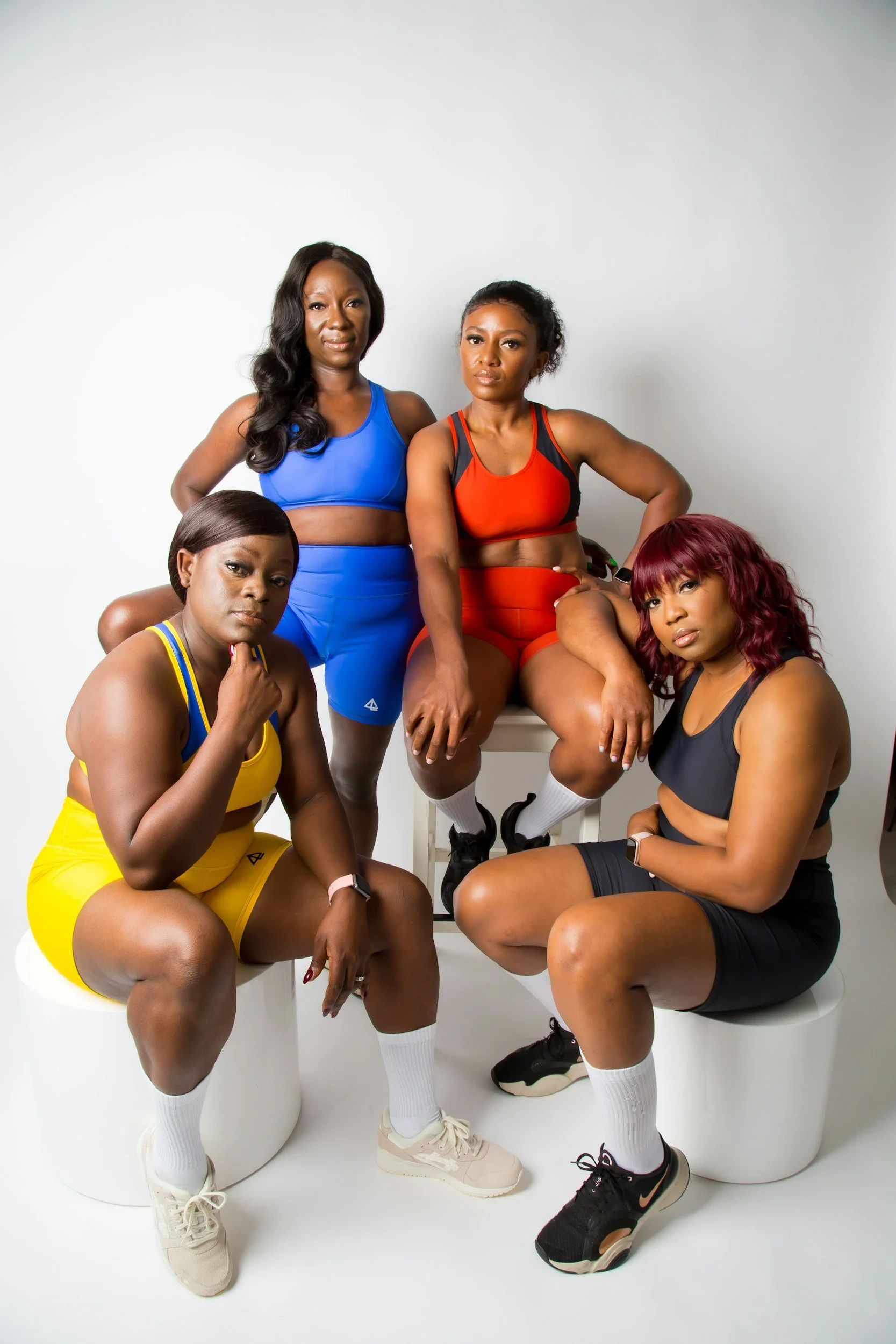
Four African American athletes together. One is wearing yellow shorts and a yellow and blue sports bra. They are wearing white shoes and socks and a watch and a ring. The athlete behind the one in the yellow is wearing blue. Next to the athlete in blue is an athlete wearing read. Finally, the fourth athlete is in black. They have white socks and black shoes.
When it comes to gender inequity in sports, one blog post cannot do the conversation justice. There are many conversations and threads that must be discussed. Moreover, conversations need to be turned into action. However, we must begin somewhere. This blog post hopes to serve as primer to introduce the topic in hopes of inspiring more conversations and action to bring about lasting change.
Key Areas of Inequality
Pay and Compensation
There exist major salary disparities in elite sports. The U.S. Women’s National Soccer Team (USWNT) was not being paid nearly enough when compared to the Men’s National Team (USMNT) before a 2022 agreement. Before the 2022 agreement, the USWNT were demonstrating extreme talent, getting paid way less than the USMNT (Hussain, 2020) and had been strong advocates for themselves in their pay. Then in 2022, because of their advocacy, they now have identical game payments, revenue sharing, and splitting World Cup prize money through 2028. While this one success story, it took a lot of work to reach this place. There are still sports where the pay is vastly different. The minimum NBA salaries far exceed maximum WNBA salaries and, like the elite soccer players, the elite basketball players continue to advocate for themselves for this to change (Ettienne, 2019).
Media Coverage
Women’s sports receive far less media coverage than men’s sports (Darvin & Sagas, 2017). The consequences of just this alone means they have reduced visibility, sponsorship, and fan engagement. While there have been some gains in terms of media visibility, at major sporting events, there is still work to be done (Bernstein, 2002).
Resources and Facilities
Challenges also arise in the inadequate training facilities, often fewer available support staff, and less advanced equipment, which can hinder their development as athletes (Sveinson et al., 2022). What Sveinson et al. (2022) also argued is that the unpaid, invisible, and emotional labor of women, especially women holding diverse social identities, has been - and continues to be - a consequential contributor to gender inequity at the organizational level within sports. While is not directly related to physical resources, it is related to the resources that women in the sports industry constantly contribute, but is not discussed and appears to not be valued.
Leadership and Coaching
It does not take much to scan the statistics and notice the under-representation of women in executive positions in sports federations and coaching roles, especially when looking at the elite levels (Leberman & Shaw, 2015; Serpell et al., 2023; Walker & Bopp, 2011). However, maybe the problem begins earlier than the professional level. Research has discussed that there are persistent male biases within the spectrum of sport management education (Moore & Huberty, 2014). Furthermore, within the context of graduate studies researchers found a disconnect between university preparations and the necessary skills needed for women to be leaders in the sport industry (Leberman & Shaw, 2015). The question then arises if women are being set up to fail. When it comes to coaching, Walker & Bopp (2011) found a double standard where men are offered great coaching opportunities in both men’s and women’s sports.
Societal and Cultural Barriers
Sports cannot escape traditional gender norms, roles and sex stereotypes that can discourage girls from sports (Chalabaev et al., 2013). For example, society often categorizes sports as either male or female based on traditional views of gender characteristics, and these cultural biases have an influence over the acceptance and support of women in different sports while the social prejudice diminishes women’s participation in certain sports, reducing their recognition as serious athletes (Indelicato, 2025). Additionally, the stereotypes that impact women impact their ability to perform. Women in sports experience what is called stereotype threat, especially when the sport is considered typically masculine (Gentile et al., 2018). When these factors are considered, it is clear how much women must navigate when it comes to societal and cultural barriers.
Dress Codes
Yes, even uniforms can be discriminatory. Women’s team uniforms can sexualize female athletes and cause discomfort (Holzer, 2024). Gymnastics, track and field, volleyball, tennis, and badminton are sports frequently brought up in these discussions.
Yes, there are a lot of citations in this post, with good reason. These barriers and concerns have been documented and researched extensively. They are not being made up or are simple observations. Hopefully, this post has given everyone a good jumping off point to engage in meaningful discussion to bring about change.
take action today moment:
Take the time to learn more! There are numerous scholarly articles as well as great articles from reputable organizations that talk about the issues discussed above. The piece that is also important is to learn more about the arguments that offer counterarguments because when in discussions with people everyone of us needs to be knowledgeable and be able to address any and all points.
Learn More About the Connection of Mind and Body in Athletics:
UNESCO Report: Women and girls’ access to sport still lagging far behind
Do You Know the Factors Influencing Girls’ Participation in Sports?
References
Bernstein, A. (2002). Is it time for a victory lap? Changes in the media coverage of women in sport. International Review for the Sociology of Sport, 37(3-4), 415-428. https://doi.org/10.1177/101269020203700301
Chalabaev, A., Sarrazin, P., Fontayne, P., Boiché, J., & Clément-Guillotin, C. (2013). The influence of sex stereotypes and gender roles on participation and performance in sport and exercise: Review and future directions. Psychology of sport and exercise, 14(2), 136-144. https://doi.org/10.1016/j.psychsport.2012.10.005
Darvin, L., & Sagas, M. (2017). Objectification in sport media: Influences on a future women’s sporting event. International Journal of Sport Communication, 10(2), 178-195. https://doi.org/10.1123/IJSC.2017-0022
Ettienne, L. (2019). It's time to pay up, the justification for higher salaries for WNBA players: An analysis of the WNBA's success and employing mediation between the WNBA and NBA to leverage future success. Pepp. Disp. Resol. LJ, 19, 175.
Gentile, A., Boca, S., & Giammusso, I. (2018). ‘You play like a Woman!’Effects of gender stereotype threat on Women's performance in physical and sport activities: A meta-analysis. Psychology of Sport and Exercise, 39, 95-103. https://doi.org/10.1016/j.psychsport.2018.07.013
Holzer, L. (2024). Gendered athletes in sports: CEDAW’s role in tackling heterosexist and racialized uniforms in sports. Sports and Human Rights, 10, 43.
Hussain, I. (2020). Wage and Gender Discrimination: An Analysis of the US Women's National Soccer Team. The Journal of Total Rewards, 29(1), 14-27.
Indelicato, A. (2025). Does gender equality in sports matter? Examining the socio-economic impact on public perceptions. Frontiers in Sports and Active Living, 7, 1537064. doi: 10.3389/fspor.2025.1537064
Leberman, S., & Shaw, S. (2015). ‘Let’s be honest most people in the sporting industry are still males’: The importance of socio-cultural context for female graduates. Journal of Vocational Education & Training, 67(3), 349-366. https://doi.org/10.1080/13636820.2015.1057212
Moore, M. E., & Huberty, L. (2014). Gender differences in a growing industry: A case of sport management education. International Journal of Humanities and Social Science Invention, 3(9), 19-25.
Serpell, B. G., Harrison, D., Dower, R., & Cook, C. J. (2023). The under representation of women coaches in high-performance sport. International Journal of Sports Science & Coaching, 18(4), 1320-1332. doi: 10.1177/17479541231160229
Sveinson, K., Taylor, E., Keaton, A. C., Burton, L., Pegoraro, A., & Toffoletti, K. (2022). Addressing gender inequity in sport through women’s invisible labor. Journal of Sport Management, 36(3), 240-250. https://doi.org/10.1123/jsm.2021-0229
Walker, N. A., & Bopp, T. (2011). The underrepresentation of women in the male-dominated sport workplace: Perspectives of female coaches. Journal of Workplace Rights, 15(1), 47-64. doi: 10.2190/WR.15.1.d