Interoception
Continuing on the mind-body connection that we started this month, there is another essential concept to explore: interoception. Interoception is the sense of your body's internal state, providing awareness of things like your heartbeat, bodily sensations, or thirst. Simply put, interoception is our ability to sense and be aware of what is happening within our own bodies. Why is it so important to us? Let’s dive in and find out why.
Welcome to the World of Interoception
The topic of interoception is a massive topic that can take us down many different paths. All of these paths are essential, interesting, and detailed. So just a few introductory key points will be introduced in this discussion. When discussing interoception from a broader definition it can include the multi-dimensional construct perspective that also accounts for how we attend to, understand, and engage in response to the sensations in our bodies (Cameron, 2001; Verdejo-Garcia et al., 2012; Vaitl, 1996). So not only are we looking at the sensations themselves but then how we engage with them, which is an essential consideration because the information we get from our body can be of service, especially when we need something. Building on the above interoception is considered an iterative process, meaning that the interaction of what we perceive in our body states and our cognitive appraisal are what help inform our responses (Farb et al., 2015). Now we have the layer of cognition. So when we add in cognition, that opens the door to a discussion about how our experiences and our learning colors how we understand our bodily sensations. One person might interpret a sensation one way while another might understand it a different way.
Interoception continues to serve us when it comes to topics related to self-regulation and emotion. There is evidence supporting the connection between interoception and self-regulation as a means helping us maintain homeostasis (Gu & FitzGerald, 2014). This makes sense given that our body sensations cue us to obtain food, find water, etc., which brings our bodies back into balance of homeostasis. Furthermore, our ability to perceive our visceral signals plays an essential role in many theories of emotion introduced in the scientific literature (Pollatos et al., 2025). We need to know our internal states, not only for basic survival needs like food, but also to let us know how we are feeling. Hopefully, this sounds familiar and/or connects back to the discussion on the mind-body connection and even the post on emotions about emotions also being in the body.
Now, since a previous post brought up the ideas of embodiment in our mind-body series, let’s bring that concept back around to see how interoception connects in that area. If we consider embodiment, it encourages more awareness about our bodily sensations (interoception) and thus it allows two complimentary senses to develop: presence, or a person’s connection to the present moment, and agency, or a person’s ability to effect changes (Seth et al., 2011). Think about meditation and how it encourages people to connect with their bodies and breath and the result of meditation being more in the present moment and encouraging people’s ability to respond rather than react.
Interoception Exercise
That’s enough science. Now it’s time to touch into our interoceptive abilities using our hearts. Some people can feel their heart beat and others cannot. There is no judgement either way. Here is your chance to tune into your body and see what you notice about your ability to connect with your heart beating if you opt to. Remember it is always optional whether anyone participates in these exercises.
Find a quiet and safe space. Take a moment to settle whether that is standing, sitting, or laying down. Allow yourself to rest into your posture with eyes closed or eyes open finding a spot for your gaze to rest a couple inches in front of you. Begin to bring your attention to your body breath and/or body, just beginning to become aware of how your body is doing in the moment. After a couple of minutes, turn your attention to your heart. What do you notice? Do you feel your heart beating? The answer can be yes or no. No matter the answer make sure you do not judge yourself if you do not feel your heart beating. Take a few moments to just be with the experience.When you are ready thank your body for giving you the opportunity to check-in and bring your awareness back to the space.
Thank you for exploring the topic of interoception via science and with an exercise!
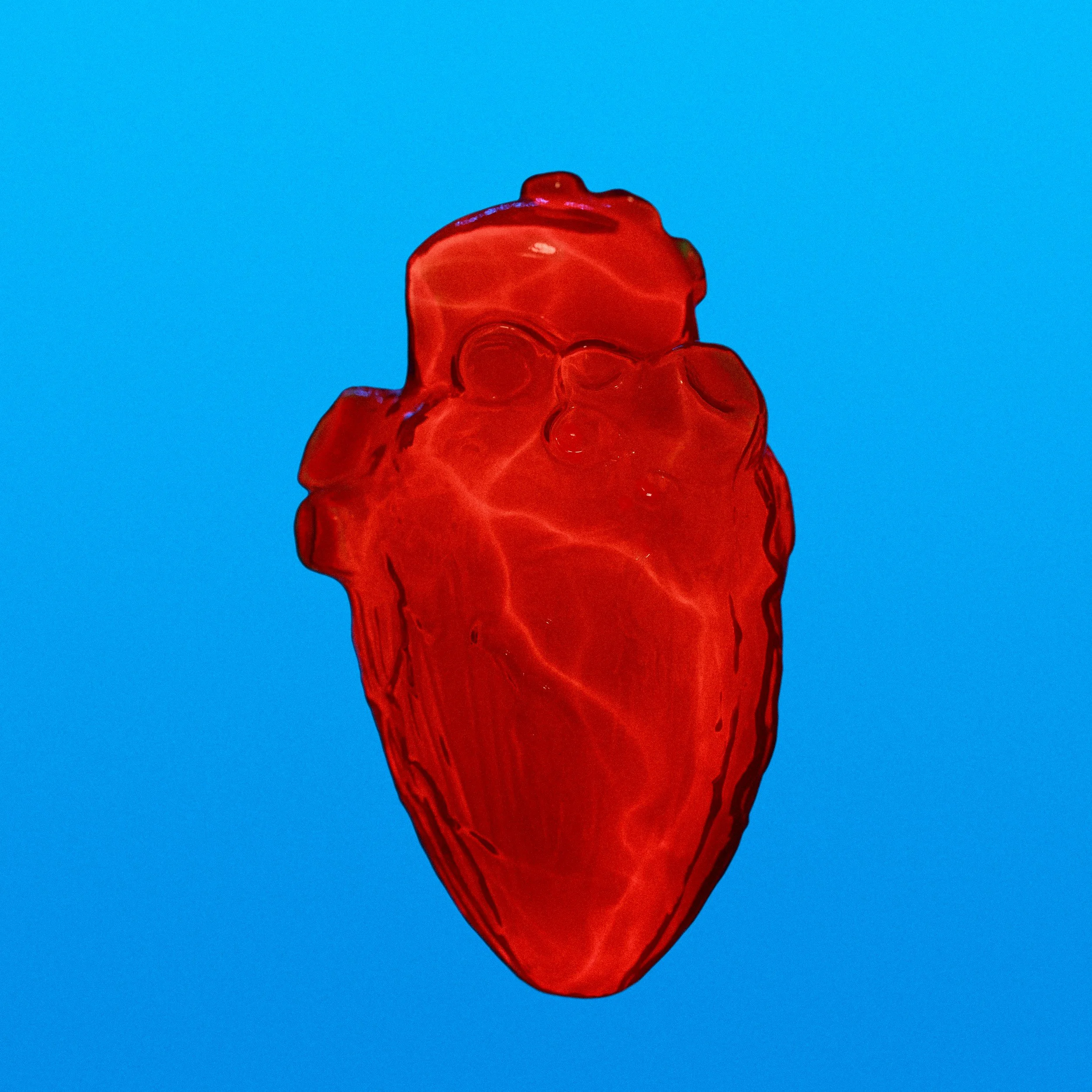
A red biological heart on a blue background.
take action today moment:
Give the above exercise a try if you feel comfortable and safe to do so. That is the important piece. Make sure you feel safe. Trauma is real and if the body is not a safe place at the moment, please honor and respect that.
Learn More About Interoception:
Interoception: Our Real-Life Superpower | Carrie DeJong | TEDxChilliwack
References
Cameron, O. G. (2001). Interoception: The inside story—a model for psychosomatic processes. Psychosomatic Medicine, 63(5), 697-710.
Farb, N., Daubenmier, J., Price, C. J., Gard, T., Kerr, C., Dunn, B. D., ... & Mehling, W. E. (2015). Interoception, contemplative practice, and health. Frontiers in Psychology, 6, 763. doi: 10.3389/fpsyg.2015.00763
Gu, X., & FitzGerald, T. H. (2014). Interoceptive inference: homeostasis and decision-making. Trends in Cognitive Sciences, 18(6), 269-270.
Pollatos, O., Kirsch, W., & Schandry, R. (2005). On the relationship between interoceptive awareness, emotional experience, and brain processes. Cognitive Brain Research, 25(3), 948-962.
Seth, A. K., Suzuki, K., & Critchley, H. D. (2012). An interoceptive predictive coding model of conscious presence. Frontiers in Psychology, 2, 395.
Vaitl, D. (1996). Interoception. Biological Psychology, 42(1-2), 1-27.
Verdejo-Garcia, A., Clark, L., & Dunn, B. D. (2012). The role of interoception in addiction: A critical review. Neuroscience & Biobehavioral Reviews, 36(8), 1857-1869.