Fatphobia in Sports
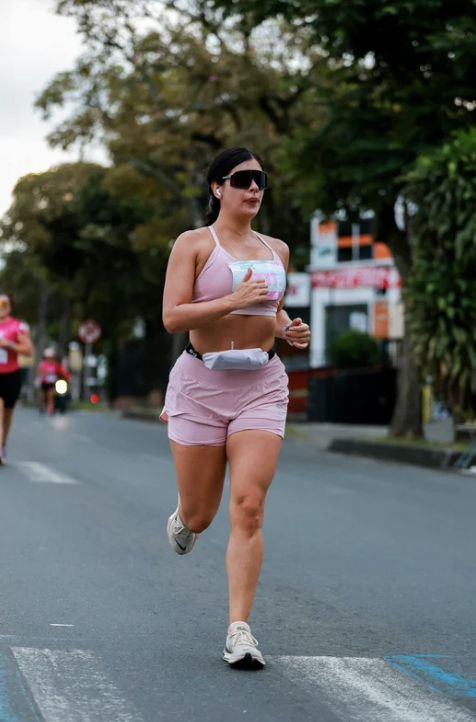
A person with brown hair wearing sunglasses, a pink bra, and pink shorts running on the road.
After discussing emotions, thoughts, and feelings last week, we are back to discuss systemic concerns in sports. This week's focus is fatphobia. As before with the previous posts on racism and gender inequity, we will not be able to do this topic justice in such a short space. However, hopefully it serves as a pathway for understanding more about this topic and how it’s a systemic issue that must be addressed.
Before diving into fatphobia in sports, it is essential to look at the role of stigma. This discussion is not just relevant to this topic, but is relevant to gender inequity, racism, and even mental health, as stigmas exist in these realms as well as many others. Stigmas operate in such a way to separate people who possess what many consider undesirable traits from the general population via different means to convey that lack of desirability of these traits (Inderstrodt-Stephens & Acharya, 2018). Stigma is insidious in how it operates.The messages that stigma give provide content cues to categorize the people as a separate social entity via group labels (Inderstrodt-Stephens & Acharya, 2018). So we arrive at “othering” people and labeling them. The consequences of this process are detrimental.
What is fatphobia in sports? Fatphobia in sports involves a pervasive anti-fat bias that leads to discrimination, negative messaging, exclusion, and harmful practices, like shaming or restrictive diets, creating environments that are unwelcoming while also negatively impacting athletes’ mental and physical health. Research has already established that fatness in the dominant culture here in the US is a strongly stigmatizing characteristic and very prevalent leading to negative stereotypes and prejudices (Harjunen, 2025). Sports can escape the full impacts of the stigma. In fact, “overweight” athletes are constantly exposed to many types of stigma on a regular basis in addition to self-stigma that they internalized from outside messages (Inderstrodt-Stephens & Acharya, 2018). What is more, people with non-normative sized bodies often face various challenges in the physical, social, and psychological domains, meaning their needs are frequently overlooked, while also posing a challenge to the field of sport and exercise (Harjunen, 2025). There are many manifestations of fatphobia that we will explore in this post. With that said, these are not the only ones.
Differential Treatment
Athletes can be overlooked for various opportunities like sponsorships, leadership roles, the opportunity to play, etc. because of body size. Here are just a few examples. Larger athletes, despite contributing to a team’s success, are not frequently chosen to be the “face” of the team, with credit being centered more on learner, “conventional” body types. Sports equipment, apparel, and, yes, even venue infrastructure like seat sizes are not designed to accommodate all different sizes of bodies, thus limiting participation. One final example is the weight-based rules in certain sports. Combat sports or equestrian sports that frequently impose strict weight-loss requirements, which open the door to high-risk, rapid weight-management behaviors. To add a little context in weight-sensitive sports, rapid weight loss (RWL) practices have been essential in these sports; however, they can have physical, physiological, and psychological negative effects on athletes, which has led to a discouragement for many years (Khodaee et al., 2015).
Negative Verbal and Nonverbal Language
The use of size-based nicknames, teasing, or labeling players as lazy or unprofessional are just some examples of how discrimination and bias continues to manifest. Let’s look specifically at body shaming. Body shaming is the act of humiliating someone via the use of inappropriate or negative comments about body size, weight, or shape, and when used explicitly and consistently can be a form of bullying and as a form of social aggression or emotional abuse (Varea et al., 2025).
Coach, Media, and Peer Bias
Coaches play a rather large role in athletes' lives. They train, guide, and motivate athletes via teaching skills, developing strategies, and creating training programs to help athletes excel in their chosen sport. Now what happens when coaches have weight bias and fatphobia? Research has demonstrated that youth athlete coaches (Winter et al., 2023) as well as collegiate coaches (Cadavid et al., 2025) can have weight bias, which directly affects athletes. This may show up in inadequate coaching approaches via the lack of knowledge on how to properly cue movement for different body types or even misinterpretations of heavy breathing or increased sweating as a lack of fitness, rather than the biological mechanism of larger bodies needing more energy to cool down and perform. Furthermore, larger bodies have different centers of gravity, balance, and range of motion, which means they need tailored training techniques, which not all coaches are equipped to offer. When fatphobic beliefs are allowed to flourish harmful environments are created that can sometimes even lead to disordered eating for athletes. Bias shows up in size-based assumptions where they may be teased in the locker room or have their athletic competence called into question by peers and even the media.
Aesthetic Pressure
Frequently, when the focus is on a specific “ideal” physique, it can make sports feel exclusive and unsafe for people with larger bodies. In sports that have an emphasis on aesthetics, such as gymnastics and figure skating, there is often an emphasis on rigid, thin, or muscular body ideals and there are real life consequences about this type of culture. For example, athletes are risk of developing eating disorders and greater body dissatisfaction (Berengüí et al., 2024), increasing concerns about body image and how that relates to performance success (Zaccagni & Gualdi-Russo, 2023), and poorer mental health (Martin et al., 2025). None of these are consequences to overlook, both physical and mental health are at risk.
One topic that we did not have the time to fully explore is the intersection of gender and fatphobia. This is another area where there is a lot of research and discussion (Choi, 2025; Harjunen, 2025). While this post and the previous posts about gender inequality and racism in sports were written more as isolated topics, they are not. There are plenty of places where intersectionality comes into play. Hopefully, that can be a topic for another discussion.
Once again, so many articles were used to support the points in this post for the same reason as the other recent posts. The pervasive impacts are well documented, none of this is made up!
take action today moment:
Take a moment to consider what you just read. Did you learn something new? Did something resonate with you? What are you inspired to do? Do you want to learn more? Additionally, take a moment to consider what messages you have internalized from family, culture, and the world about what size you “need to be” whether you are an athlete or not without judgement. The point is not to judge, the point is to be aware of one’s own beliefs, assumptions, thoughts, etc.
Learn More About the Connection of Mind and Body in Athletics:
‘Fat don’t flip’: The quiet trauma of sports culture
Eating Disorders and Young Athletes
Body Shaming & “Fat Talks”: Damaging to the mental and physical
References
Berengüí, R., Angosto, S., Hernández-Ruiz, A., Rueda-Flores, M., & Castejón, M. A. (2024). Body image and eating disorders in aesthetic sports: A systematic review of assessment and risk. Science & Sports, 39(3), 241-249. https://doi.org/10.1016/j.scispo.2023.03.006
Cadavid, A., Hamrick, S., Terrell, K. R., Hamadi, H. Y., & Zeglin, R. J. (2025). Exploring weight bias, fatphobia, and diversity training among collegiate athletic coaches. International Journal of Sports Science & Coaching, 20(3), 917-926. https://doi.org/10.1177/17479541241313052
Choi, Y. (2025). Athletic fat and disidentification: reading gender, sport/exercise, and fatness on YouTube. Journal of Sport and Social Issues, 49(5), 406-425. doi: 10.1177/01937235251356991
Harjunen, H. (2025). Gendered fatphobia in the field of sport and exercise. Journal of Gender Studies, 1-14. https://doi.org/10.1080/09589236.2025.2517348
Inderstrodt-Stephens, J., & Acharya, L. (2018). “Fat” chicks who run: Stigma experienced by “overweight” endurance athletes. Journal of Sport and Social Issues, 42(1), 49-67. https://doi.org/10.1177/0193723517747
Khodaee, M., Olewinski, L., Shadgan, B., & Kiningham, R. R. (2015). Rapid weight loss in sports with weight classes. Current Sports Medicine Reports, 14(6), 435-441.
Martin, C., Nguyen, L. T., Williams, A., & Bunn, J. (2025). Examining the roles of body image perception on the mental health of female athletes in highly aesthetic sports: A systematic review. Current Issues in Sport Science (CISS), 10(1), 004-004. https://doi.org/10.36950/2025.10ciss004
Varea, V., Primus, R. S., Barker-Ruchti, N., & Quennerstedt, M. (2025). The anatomy of body shaming in sports coaching. Sport in Society, 28(5), 722-739. https://doi.org/10.1080/17430437.2024.2380452
Winter, E. L., Bellara, A. P., Bray, M. A., Puhl, R. M., Kaufman, A. S., Trudel, S. M., & La Salle-Finley, T. (2023). Fat phobia among youth sport coaches. Journal of Sport & Social Issues, 47(5), 413–432. https://doi.org/10.1177/01937235231223988
Zaccagni, L., & Gualdi-Russo, E. (2023). The impact of sports involvement on body image perception and ideals: A systematic review and meta-analysis. International Journal of Environmental Research and Public Health, 20(6), 5228. doi: 10.3390/ijerph20065228