Fall Leaf Inspiration: Brown - The Healing Power of Letting Go
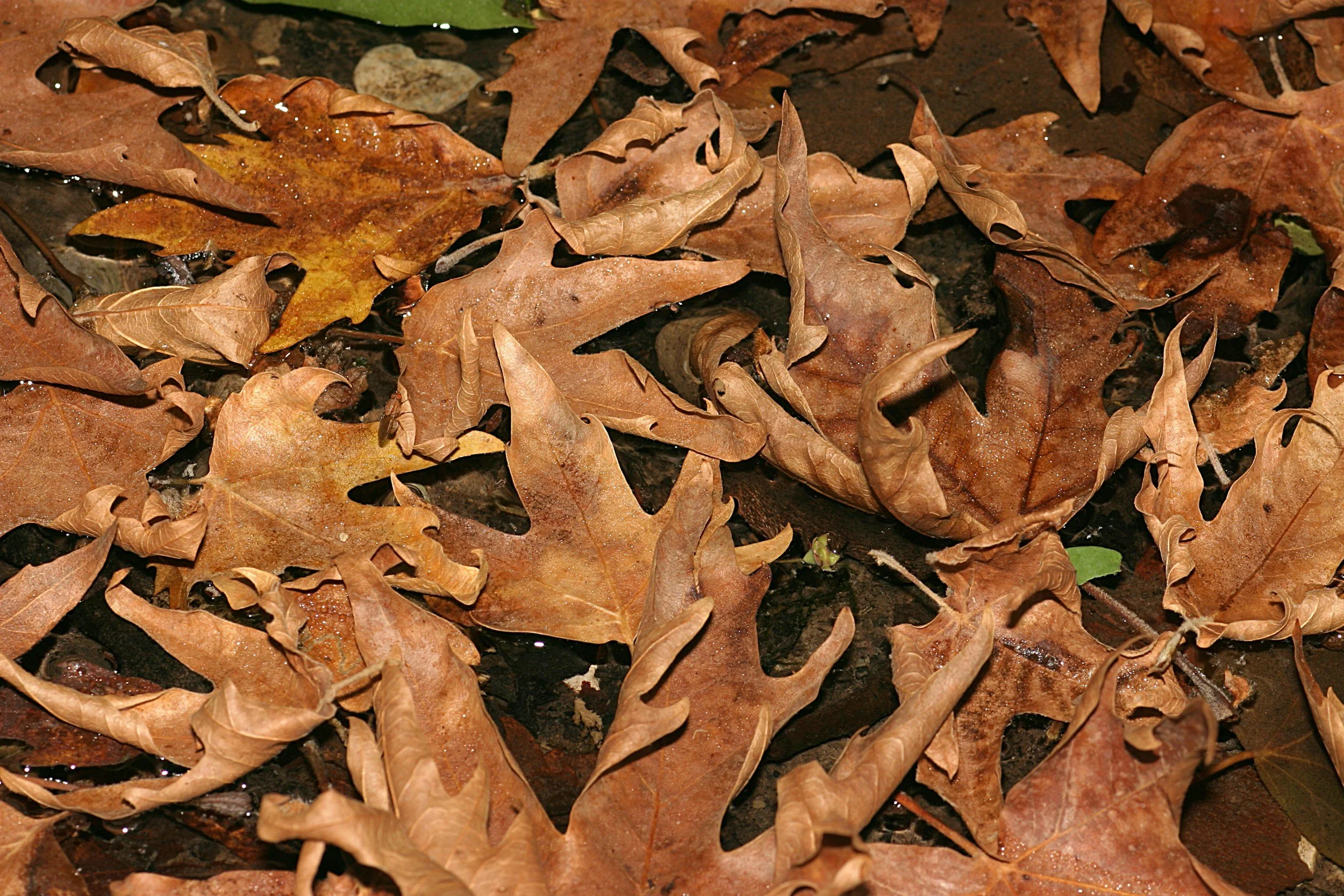
Brown Maple leaves on the ground. There is soil visible between the leaves.
We have covered red, orange, and yellow thus far. That leaves us with one more color to explore. By late fall, the vibrant canopy of reds, oranges, and yellows gives way to an earthier tone: rich, grounded brown. Leaves fall to the ground, blanketing the soil. To the untrained eye, these dry brown leaves might look like the end of life—a stark symbol of loss or decay.
In reality, fallen brown leaves are proof that letting go is a natural, essential part of healing.
A tree doesn't hold onto dead foliage out of fear of what comes next. It drops its leaves to protect its roots from freezing temperatures, conserving its energy so it can survive the winter and bloom again in spring. Nature doesn't mourn what falls; it lets the old decompose to nourish the soil for future growth. Those leaves also provide critical winter shelter for wildlife.
In life, we often cling tightly to old habits, outdated worries, and past hurts long after they have stopped serving us. Learning how to let go isn't about erasing your history—it's about laying down the heavy weight you were never meant to carry forever.
Why We Hold On: The Somatic Weight of the Past
Why is letting go so difficult? Why do we mentally rehash old arguments, hold onto resentments, or stay trapped in habits that cause us stress and angst?
From a nervous system perspective, the familiar feels safer than the unknown, even if the familiar is painful. While this may sound strange, it is true. Finding comfort in joy and happiness may be harder for someone who is used to being around conflict. That person may have grown up learning how to navigate and survive conflict day and day out. So their nervous system and psyche is tuned to that environment. Now when that person is put into an environment where there is peace and even many chances for connection that can be scary because being in that type of environment is unknown even if it might be a better environment. Another way to cover what was just said is that when you experience emotional hurt or pain, your brain files that memory away as a survival warning. Your physical body stores the sensate experience as body memory.
Holding onto past worries or hurts thus may be viewed as a nervous system and somatic defense mechanism, which means we must invite self-compassion into the picture. What can get lost in when talking about letting go of what does not serve us is that it may not be a simple and easy process because of how embedded past worries and hurts can be. With that said, keeping your muscle tension high and your nervous system on guard drains your daily energy reserves. Just as a tree cannot grow new leaves while holding onto the old ones, your mind and body cannot easily step into present peace while carrying the weight of past seasons.
Identifying What You No Longer Need to Carry
Releasing the past begins with gentle awareness. Ask yourself: What am I holding onto out of habit rather than necessity?
Common burdens we tend to carry for too long include:
Old Self-Protective Habits: Perfectionism, people-pleasing, or hyper-vigilance that once kept us safe, but now keeps us exhausted.
Past Performance Regrets: Replaying old mistakes, athletic losses, or career failures over and over in our minds.
Resentment and Unforgiveness: Holding onto anger toward someone else, which binds our own nervous systems in chronic stress while doing nothing to change the past.
A Simple Somatic Journaling Exercise: The "Shed & Ground" Release
To help your nervous system physically process and release old pain, grab a notebook and follow this 3-step somatic journaling ritual:
Step 1: Locate the Heavy Weight
Sit comfortably with both feet flat on the floor. Take a slow, deep breath and scan your body and just notice any sensations, how you are breathing, and where you mind is in the moment. Hold what you notice with self-compassion and nonjudgement. Then identify one old habit, worry, or hurt you are tired of carrying. On a scale of 1 to 10 where 1 is a habit, worry, or hurt that you do not hold onto and 10 is the worst habit, worry, or hurt that you can think of, please pick something on the lower end of the scale that will not send your nervous system into super high alert. Notice how your body responds to the habit, worry, or hurt you pick. Note any sensations, images, or thoughts that arise. Again, hold the experience with self-compassion and nonjudgement. When you are ready use the journal prompt below.
Write at the top of your page: "The weight I am carrying is..." Describe it in a few sentences. Note it says describe. Description means that you are writing using words that do not hold judgement and rather stay in description. Let’s use a quick example.
Judgement Language: "He left his messy, disgusting clothes all over the dirty floor."
Descriptive Language: "He left three shirts and a pair of jeans on the bedroom floor."
Somatic Check-In: Notice where you feel this memory in your body as you write or after writing depending on which you prefer. Is it a tightness in your stomach? A heavy weight on your chest? Notice any shifts in your experience from when you were just thinking about the habit, worry, or hurt to after you have written about it.
Step 2: Acknowledge Its Original Purpose
We hold onto old habits, for example, because they tried to protect us at one point. Give that part of yourself credit so your nervous system can relax its guard. This may be a different approach than many of us have experienced because often we get mad or upset because this habit is something we want to go away. But, when we approach with self-compassion and understanding, the grip that this habit has on us can begin to loosen.
Write: "This habit/thought tried to protect me by..." (e.g., "Perfectionism tried to protect me from being criticized.")
Step 3: Offer Somatic Permission to Let Go
Place one hand over your chest or sternum [This is a gentle vagal anchor. In Polyvagal Theory (Porges, 2022), the ventral branch of the Vagal Nerve is the part of the autonomic nervous system that is our social connection]. Feel the physical warmth of your hand.
Write: "I no longer need this protection today. I release..."
Action: As you finish writing the sentence, take a deep breath in through your nose, and as you exhale slowly through your mouth, physically drop your shoulders, unclench your teeth, and let your body soften.
Please note that this process is about permission, rather than the work that may be needed to deeply change what could be a deeply held habit, worry, or hurt.
Fallen leaves don't vanish overnight; they gradually decompose, turning into rich compost that feeds the roots of the tree. The painful chapters, old mistakes, and heavy seasons of your past aren't wasted time—they are the very material enriching your wisdom, empathy, and resilience today.
This fall, look at the brown leaves covering the ground and take a deep breath. Give yourself permission to loosen your grip, drop what is already gone, and trust that your roots are strong enough for whatever comes next.
take action today moment:
Give the above exercise a try! Remember to stay connected to your body during the process. Your body holds so much wisdom. Let your body help you understand how a habit, worry, or hurt may no longer be serving you so you can take the first step, permission, of welcoming something new.
Learn More About Letting Go :
Mastering the Art of Letting Go
How to Let Go & Why It’s So Important for Wellbeing
The Science of Forgiveness: Why Letting Go Heals Your Brain [YouTube]
References
Porges, S. W. (2022). Polyvagal theory: A science of safety. Frontiers in Integrative Neuroscience, 16, 871227. https://doi.org/10.3389/fnint.2022.871227