Mind-Body Connection
Within some fields, such as Dance/Movement Therapy (DMT), there is a fundamental concept. The concept of the mind-body connection. What is the mind-body connection? The mind-body connection is the intricate, bi-directional relationship that exists between our thoughts, emotions, and physical health and the body. What is important to note here is that we are talking about a connection. The mind and the body are not two separate entities, rather they are interconnected and influence each other. There is growing research that is now demonstrating how both the mind and the body have the potential to impact cardiovascular health negatively and positively (Levine, 2019). This is not the only body of evidence that has demonstrated connection. The field of psychoneuroimmunology has also been essential in adding to the body of knowledge about the importance of the mind-body connection (Littrell, 2008). The scientific evidence for the mind-body connection continues to build.
Coming back to the opening sentence regarding DMT, Berrol (1992) said that the paradigm of the brain is rooted in the understanding that there is a neuronal interplay between our emotions and movement. Because of the research being done exploring the mind-body connection, we are now even able to explore the impacts of systemic problems like racism as racism impacts both the brain and human body’s physiology (Muscatell et al., 2022). Stress is a good example of how the mind-body connection shows up. Think about how when we are stressed we feel it psychologically and physically. The other piece that we must consider is how some cultures around the world have, for centuries, understood this connection and have integrated it into wellness practices.
As a quick heads up, this blog post is setting the foundation for further posts about topics such as embodiment and interoception.
Time to Explore the Mind-Body Connection for Yourself
One of the best ways to explore a concept is to engage in an experiential. So if you are game to try, this section offers everyone two exercises to try. You are always more than welcome to opt out of the experiential part and just read the blog post if that feels right for you. There is no expectation.
Take a moment and orient yourself in space in a position that represents happiness. There is no one way this position needs to look. For some, it might be holding their head high, with their chest open, shoulders down, and with a smile on your face. For others, it may look completely different. The essential piece is that whatever the body orientation is for you, it is one that you connect with happiness. Once you're in that position and ready, take a breath and a moment to notice how you feel. How are you feeling? Did your internal state shift? Just notice with no judgment. If you do not notice anything, that is okay as well. Now, release whatever position you are in and with intention shake it out.
Now for the second exercise. Think of a time when you felt a strong emotion in your life. It can be joy, sadness, anger, etc. With that said be mindful of the emotion that you pick so that you are not intentionally triggering any trauma or strong distress. Make it a memory that you strongly connect with. Take a few moments to remember that moment or those moments, if that feels more appropriate. Then begin to notice how your body feels and/or responds. Are there any sensations or subtle changes in your body posture? Just notice with no judgment.
There is no right or wrong with the above two exercises. What can happen is that people notice, even subtly, how the mind responds to the body and vice versa. If you didn’t experience anything, that's okay too. Do not judge yourself. The added bonus of these exercises is that, hopefully, you also had the opportunity to practice observing with no judgment. Observing with no judgment is also a skill because we do tend to jump into judgement fairly quickly
Thanks for giving this exercise a try! Everyone learns differently so please also feel free to do more reading on the topic, ask questions of an expert, etc. based on what you need.
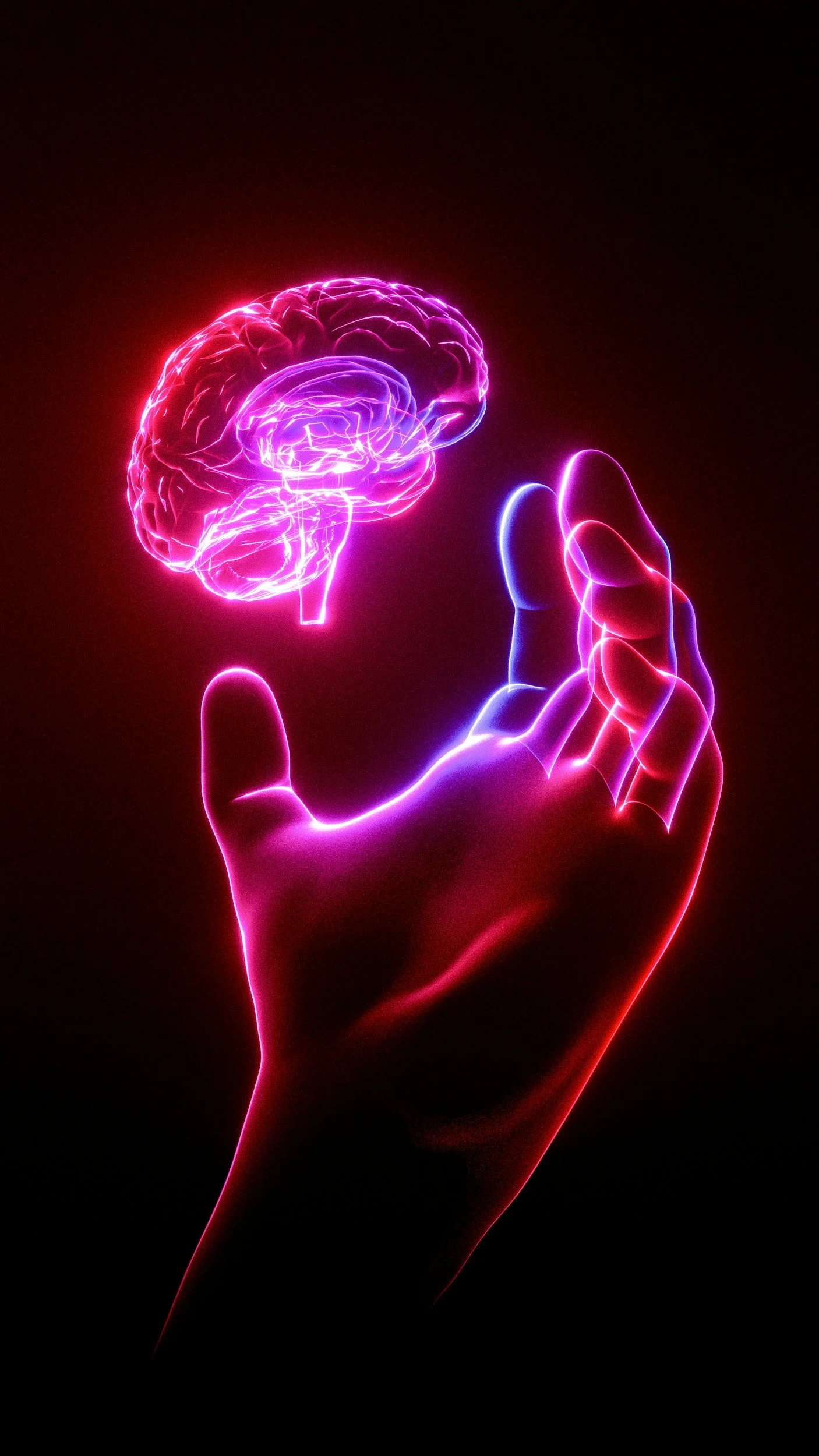
A brain and a hand outlined in light. The colors the light are red, purple, and pink. The bran is above the hand.
take action today moment:
Consider what you believe and/or understand about the mind-body connection. How does it show up in your life? There are practices that one can do to strengthen the mind-body connection such as meditation, yoga, progressive muscle relaxation, and breathing. Consider trying a practice to strengthen the mind-body connection.
Learn More About the mind-body connection:
Mind-body connection: What it is and how to strengthen it
The Mind-Body Connection: Understanding Their Link
References
Berrol, C. F. (1992). The neurophysiologic basis of the mind-body connection in dance/movement therapy. American Journal of Dance Therapy, 14(1), 19-29.
Levine, G. N. (2019). The mind-heart-body connection. Circulation, 140(17), 1363-1365. https://doi.org/10.1161/CIRCULATIONAHA.119.041914
Littrell, J. (2008). The mind-body connection: not just a theory anymore. Social Work in Health Care, 46(4), 17-37.
Muscatell, K. A., Alvarez, G. M., Bonar, A. S., Cardenas, M. N., Galvan, M. J., Merritt, C. C., & Starks, M. D. (2022). Brain–body pathways linking racism and health. American Psychologist, 77(9), 1049.