REDs: We Must Talk About It
Dedication, discipline, and the ability to push oneself are essential parts of being an athlete. But, what happens when female-identifying athletes push themselves beyond to the point of overriding fatigue to win and the very drive that helps fuel their performance becomes a detriment to their system? The very possibility of developing Relative Energy Deficiency in Sports (REDs) can become a reality. REDs is a syndrome of poor health and declining athletic performance that happens when a female-identifying athlete expends more calories through training and exercise than they take in via food (Coelho et al., 2021).
Before 2014, however, REDs was known as something else, the female athlete triad. Originally described in 1993 and later defined in 1997, the triad was diagnosed based on the presence of an eating disorder, amenorrhea, and osteoporosis (Coelho et al., 2021). Then, in 2007, 3 new components were identified: low energy availability (LEA), menstrual dysfunction, and changes in the mineral density of one’s bones (Nattiv et al., 2007; Yeager et al., 1993). However, it was later decided that the presence of all elements are not necessary to diagnose, and in 2014 REDs emerged as the new diagnosis in order to meet the need for a more holistic approach and help with identification of energy deficiency as the key to the impacts in reproduction, bone, endocrine, metabolic, hematological, growth and development, physiological, cardiovascular, gastrointestinal, and immunological health, with impacts on athlete performance and health (Mountjoy et al., 2018). And this is just the brief version of the evolution of REDs. Imagine the more indepth version!
As boring as this might have been to read, understanding REDs is important for what we will dive into next.
Psychological Landscape of REDs
Now that we have a foundational understanding of REDs, we need to dive into the psychological side of what drives REDs and how REDs then impacts mental health. You may already get where this is going. There is a cyclical nature that can occur. But let’s begin at the beginning before we get ahead of ourselves. Key drivers for REDs include perfectionism, body dissatisfaction, the drive for thinness, and an obsession with control, and these mental health factors tend to lead an athlete towards intentional food restriction and compulsive overtraining (Ruscheck et al., 2025). That is a mouthful. Let’s go even deeper and break some of that down so we can better understand. Ruscheck et al. (2025) in their systematic review found some specific points that are worth discussing:
Body image and body perception are key psychosocial factors when it comes to evaluating the context of REDs.
Dissatisfaction with one’s body has an association with problematic behaviors related to nutrition and training/exercise.
Body-checking behaviors such as frequent weighing and inspecting one’s body in a mirror have a unique role in how an athlete perceives one’s body and eating habits. Additionally, body-checking behaviors have an association with a more negative body image in female-identifying athletes and when it comes to both sexes, greater dietary control. What does this mean? It means that body-checking behaviors are a potential risk factor for the development of REDs.
The culture of athletics has evolved so that athletes not only strive for thinness, but they also may be striving for masculinity, which means that muscle dysmorphia and disordered eating are important to pay attention to.
Let’s add on a little bit more research to help complete the picture for the moment, specifically as it relates to the need for control. When athletes restrict their calorie intake or adhere to rigid dietary rules, it can provide them a sense of control over their bodies and potentially their athletic outcomes, especially if other areas of their lives feel chaotic, including their sport and personal lives (Colangelo et al., 2025). Another key piece to consider is athlete identity foreclosure. Athlete identity foreclosure is a concept that discusses one’s commitment to the athlete role in the absence of other alternatives, occupational or ideological (Brewer & Petitpas, 2017). So what does this have to do with REDs? Oftentimes sports cultures emphasize an athlete identity that can tend to normalize extreme types of behaviors to conform to certain performance narratives. In this case, an athlete identity that is deeply ingrained can lead to athletes under-fueling their bodies to a potentially dangerous place or to train through serious injuries, which means that their worth can be tied to things like endurance or weight, overriding one’s basic physical and biological needs (Langbein-Stott et al., 2026). To be fair, athlete identity does have protective factors associated with it as well, not discussed in this post. It isn’t all bleak. Take a moment and let this all sink in. What are some themes you are noticing? Control. Perfectionism. Performance anxiety.
Now let's layer on one more piece of information. The International Olympic Committee (IOC) acknowledges that mental health can be primary cause but also that mental health concerns can also be the direct symptom of REDs because LEA essentially alters brain chemistry, which can impact underlying anxiety and depression, resulting in detrimental, self-perpetuating cycle (Cabre et al., 2022). So now we have a self-perpetuating cycle….
The above is a lot to consider. It is worth considering, even if your mind might be spinning right now. There is so much to consider, including how sports culture can potentially lead to REDs. It is up to us to educate ourselves and take steps to advocate for ourselves as and for athletes in the role of coach, athletic trainer, etc. It will take all of us to bring about systemic change so that athletes are not faced with some of the many cultural factors that lead to body dissatisfaction, for example. The science and research backs it up!
Signs and Symptoms: The Warning Lights
In the next blog post we will continue to discuss REDs from a somatic perspective, but for now it is important to name signs and symptoms so that we are all paying attention and can protect ourselves and others.
Changes in Menstration
Amenorrhea: Loss of cycle for 3 months or more.
Irregular Periods: One’s cycle becomes unpredictable or even a very light flow.
Delay in Puberty: In younger athletes, the period has not started by the age of 15.
Please note that the use of hormonal birth control can potentially mask these signs.
Bone and Skeletal Health
Stress Fracture: Tiny cracks in the bones that arise from repetitive stress.
Mineral Density Changes: Bones become weak and brittle due to how hormones like estrogen are suppressed.
Athletic Performance and Physical Signs
Persistent Fatigue: The feeling of extreme fatigue, even after having a full night of sleep.
Poor Training Adaptation: Becoming weaker or slower, or lack of improvement even though training is demanding and hard.
Frequent Injury: Muscle strains, tendon concerns, or bone stress become frequent.
Frequent Illness: Getting sick more easily and taking a longer time to bounce back and get over the illness.
Reduction in Hair and Cold Tolerance: The hair may thin and one may feel cold all the time because the metabolism has slowed down in order to save heat and energy.
Digestive Health
Constant bloating, constipation, or stomach pain may occur.
Mental Health Changes
These remind us of what we discussed above and are in addition to what was discussed above.
Mood Swings: There may be an increased irritability, anxiety, or feelings of depression.
Concerns with Focusing: There may also be difficulties in concentrating on tasks.
(Angelidi et al., 2024; Cabre et al., 2022)
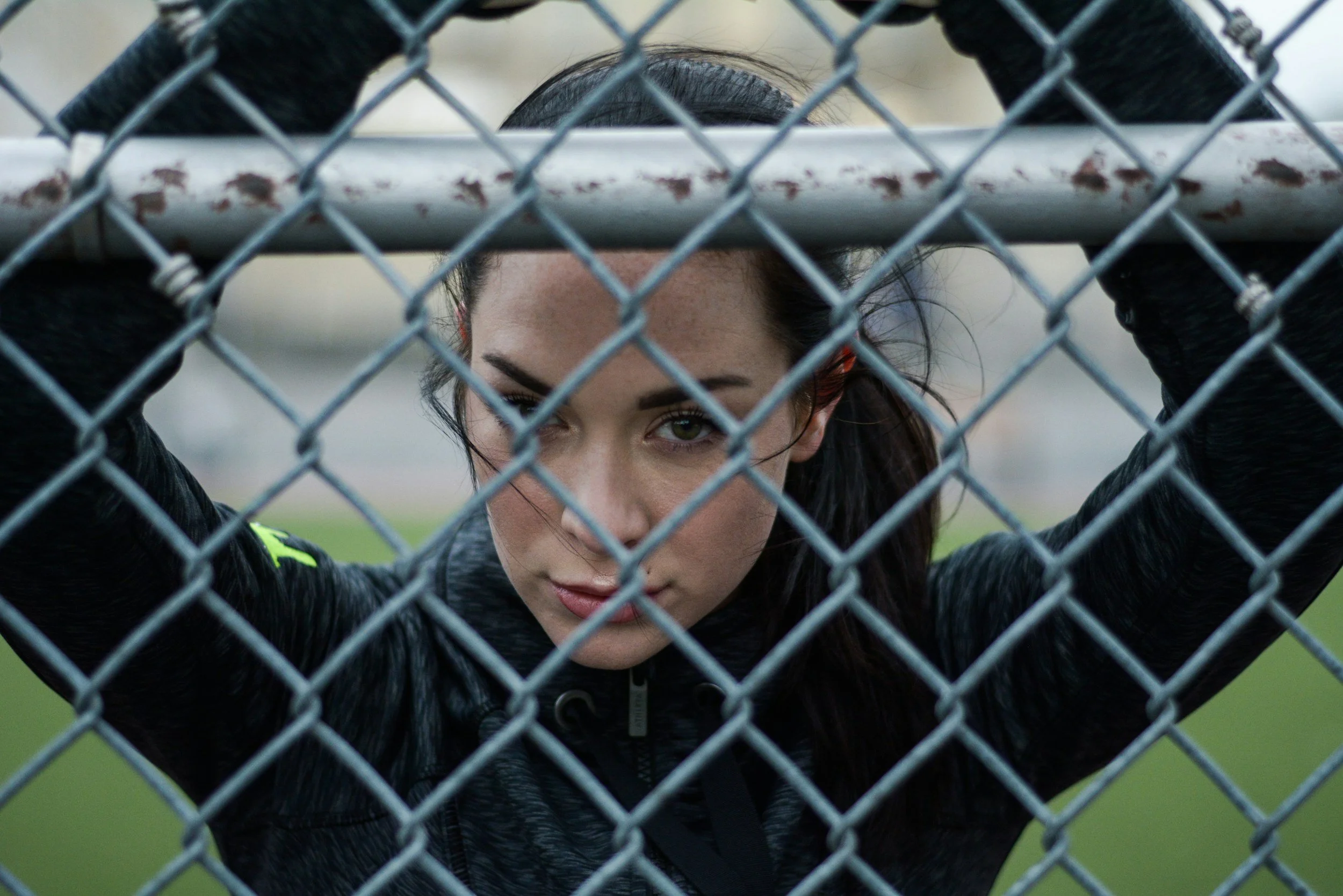
Person with long brown hair wearing a black zipper shirt looking out from behind a chain link fence.
take action today moment:
Today’s moment of action is simple. Learn more about REDs! Even if you think that this may never be of concern to you, you never know, you may have the opportunity to help someone in the future. Additionally, it helps if more people know about REDs so that good information can be shared. There are good resources available. A few are listed below.
Learn More About REDs:
REDs: The Role of Nutrition in Prevention
RED‑S in Young Athletes: A Parent’s Guide to Relative Energy Deficiency in Sport
References
Angelidi, A. M., Stefanakis, K., Chou, S. H., Valenzuela-Vallejo, L., Dipla, K., Boutari, C., ... & Mantzoros, C. S. (2024). Relative energy deficiency in sport (REDs): Endocrine manifestations, pathophysiology and treatments. Endocrine Reviews, 45(5), 676-708.
Brewer, B. W., & Petitpas, A. J. (2017). Athletic identity foreclosure. Current Opinion in Psychology, 16, 118–122. https://doi.org/10.1016/j.copsyc.2017.05.004
Cabre, H. E., Moore, S. R., Smith-Ryan, A. E., & Hackney, A. C. (2022). Relative Energy Deficiency in Sport (RED-S): Scientific, clinical, and practical implications for the female athlete. Deutsche Zeitschrift fur Sportmedizin, 73(7), 225–234. https://doi.org/10.5960/dzsm.2022.546
Coelho, A. R., Cardoso, G., Brito, M. E., Gomes, I. N., & Cascais, M. J. (2021). The Female Athlete Triad/Relative Energy Deficiency in Sports (RED-S). A tríade da atleta feminina/déficit energético relativo no esporte (RED-S). Revista Brasileira de Ginecologia e Obstetricia : Revista da Federacao Brasileira das Sociedades de Ginecologia e Obstetricia, 43(5), 395–402. https://doi.org/10.1055/s-0041-1730289
Colangelo, J., Smith, A., Henninger, K., Buadze, A., & Liebrenz, M. (2025). Exploring the presentation of REDs in ultra endurance sport: A review. Journal of Eating Disorders, 13(1), 210. https://doi.org/10.1186/s40337-025-01381-0
Langbein-Stott, R., Allen-Collinson, J., Martin, D., & Jackman, P. (2026). Relative energy deficiency in sport (REDs) and identity work in endurance athletes. European Journal for Sport and Society, 23(1), 40–56. https://doi.org/10.1080/16138171.2025.2498200
Mountjoy, M., Sundgot-Borgen, J. K., Burke, L. M., Ackerman, K. E., Blauwet, C., Constantini, N., ... & Budgett, R. (2018). IOC consensus statement on relative energy deficiency in sport (RED-S): 2018 update. British Journal of Sports Medicine, 52(11), 687-697. doi: 10.1136/bjsports-2018-099193
Nattiv, A., Loucks, A. B., Manore, M. M., Sanborn, C. F., Sundgot-Borgen, J., & Warren, M. P. (2007). American College of Sports Medicine position stand. The female athlete triad. Med Sci Sports Exerc, 39(10), 1867–1882. doi: 10.1249/mss.0b013e318149f111
Ruscheck, T., Kopp, C., Nieß, A. M., & Haigis, D. (2025). The Athlete's body image in the context of Relative Energy Deficiency in sport-A scoping review. Journal of Functional Morphology and Kinesiology, 10(4), 413. https://doi.org/10.3390/jfmk10040413
Yeager, K. K., Agostini, R., Nattiv, A., & Drinkwater, B. (1993). The female athlete triad: Disordered eating, amenorrhea, osteoporosis. Medicine & Science in Sports & Exercise, 25(7), 775-777. doi: 10.1249/00005768-199307000-00003