Fall Leaf Inspiration: Yellow - Finding Small Joys in Dark Seasons
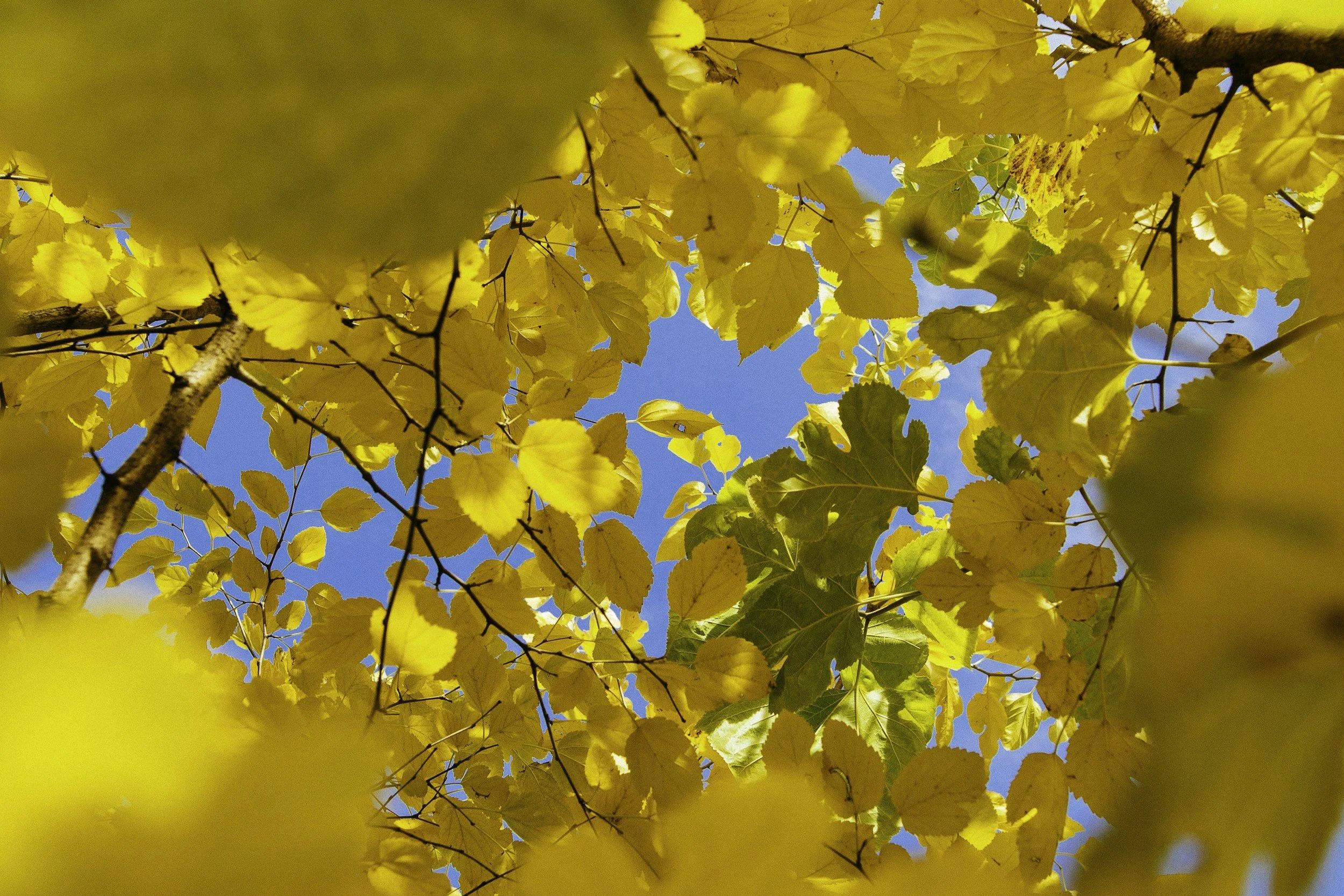
Yellow leaves against a blue sky.
Fall in many places means that we begin to see the colors of leaves change. We may see bright and fiery reds, flashy yellows, vibrant orange, and even brown towards the end. And it is these colors that will be our inspiration for the blog posts this month. Using each of these colors we will explore different themes related to mental health and fall. We will kick off with the color yellow!
Yellow Leaves
Some people love experiencing how the days grow noticeably shorter as the world begins a shift from days filled with light to days that tend to favor darkness. Additionally, we may notice how shadows lengthen, the air grows cold, and for many of us, our minds, emotions, or moods may begin to mirror the changes as we miss the long daylight days. When we’re feeling depleted, sad, or overwhelmed by life's heavy seasons, traditional advice to "just stay positive" feels distant and dismissive. Or if we are going to be more blunt about it, that advice just flat out misses the mark and lacks empathy and understanding. We can’t force a sunny disposition when our nervous systems are running low on battery.
But what we can do is look closely at the landscape right now and draw inspiration from nature as it offers a different kind of guide and perspective.
Among the changing colors of the tree leaves, there are bright yellow leaves catching the sunlight. They don’t change the fact that winter is coming, nor do they erase the cold air and the changes that come with the season. But they do something equally important: they offer small spots of light right in the middle of the dark.
In mental health and somatic practice, learning to notice these tiny good things isn't about ignoring hardship or toxic positivity—it’s about giving your nervous system a moment of safety to rest and reset.
The Science of "Glimmers"
Research has shown that when all other factors are held constant, negative information has a stronger impact on our attention, perception, memory, physiology, affect, behavior, motivation, and decision making when compared to equally awesome and stimulating positive information (Norris, 2021). This is what is known as the negativity bias and has roots in evolutionary survival. When we are exhausted or navigating a low mood, our brains might be even more inclined to stay connected to the negativity and even activate the threat detection system that naturally hyper-focuses on what is wrong, missing, or stressful. This biological survival mechanism keeps your nervous system on high alert. Our negativity bias and our fight-or-flight response are closely linked, as they share the same evolutionary threat-section system, so when the brain’s alarm center senses danger both the negativity bias and fight-or-flight response are activated (Vaish et al., 2008).
However, tuning into small, pleasant details—what trauma therapist Deb Dana calls "glimmers"—signals to your autonomic nervous system that you are safe in the present moment. Her work comes from Polyvagal Theory (Porges, 2022), which is a scientific framework explaining how our autonomic nervous systems regulate our physiological states in response to safety and threat. A vibrant yellow leaf, the warmth of a mug, or a soft sweater won't solve all your problems, but they act as a somatic anchor. It shifts your physiology out of full survival mode, even if just for thirty seconds, allowing your body to release built-up tension. With glimmers you don't need to aim to feel overwhelming joy to benefit from these moments. You simply need to acknowledge them.
5 Simple, Low-Energy Daily Habits That Bring Light
When motivation is low and the days are gray, taking those moments to find glimmers or time for yourself shouldn't feel like a demanding chore on your to-do list. Here are five easy, low-barrier habits that bring small spots of light into dark days:
The 30-Second "Sensory Pause" Outside: Step outside and find the brightest yellow leaf in sight. Don't rush past it. Take 30 seconds to look at its color, notice the crisp air on your cheeks, and take a slow breath. Let your nervous system register the beauty.
A Warm Cup Ritual: Wrap both hands around a hot mug of tea, coffee, or warm water. Feel the physical heat transferring into your palms, soften your shoulders away from your ears, and take three slow sips before checking your phone or starting your next task.
The "Micro-Walk" Without a Goal: You don't need to complete a grueling workout to get the benefits of movement. Take a 5-minute walk down your driveway or around the block. Let your feet feel the ground and allow your eyes to wander naturally without a destination in mind.
Savoring a Single Texture: Wrap yourself in a soft blanket, wear your favorite warm socks, or feel the weight of a heavy coat. Physical comfort is a direct, non-verbal way to communicate safety and ease to your body.
Spotting "Yellow" Moments: Before you go to sleep, name one tiny thing that brought a flicker of ease to your day. It could be as simple as a good song on the radio, a warm shower, or a quiet moment with a pet.
Remember, finding small joys doesn't require you to fix everything or pretend you aren't tired, burned out, or sad.
Just like the fall trees, it is completely okay if you are in a season of shifting and transition. You don't have to generate your own light right now—sometimes, all you need to do is pause long enough to notice the small spots of light that are already around you.
take action today moment:
Give one of the five suggestions above a try. You may also want to come up with your own list of glimmers that you can use when you find yourself in need!
Learn More About Polyvagal Theory:
Deb Dana - Polyvagal Theory Made Simple
Deb Dana - Neuroception, Polyvagal Theory & Trauma
References
Norris, C. J. (2021). The negativity bias, revisited: Evidence from neuroscience measures and an individual differences approach. Social Neuroscience, 16(1), 68-82. https://doi.org/10.1080/17470919.2019.1696225
Porges, S. W. (2022). Polyvagal theory: A science of safety. Frontiers in Integrative Neuroscience, 16, 871227. https://doi.org/10.3389/fnint.2022.871227
Vaish, A., Grossmann, T., & Woodward, A. (2008). Not all emotions are created equal: The negativity bias in social-emotional development. Psychological Bulletin, 134(3), 383–403. https://doi.org/10.1037/0033-2909.134.3.383